
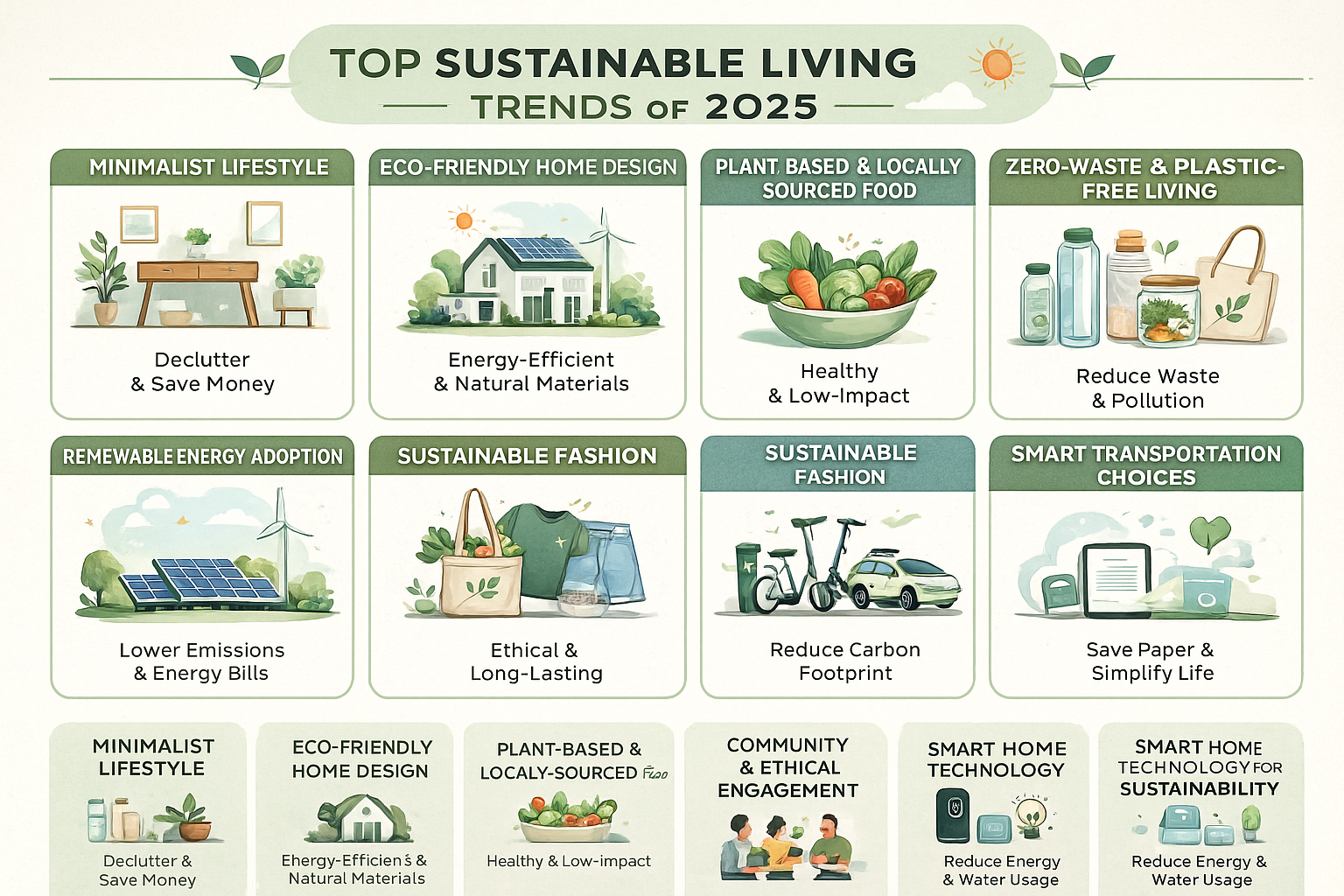
Sustainable living is no longer just a buzzword; it’s becoming a way of life for people who want to reduce their environmental impact while improving quality of life. With climate change, resource depletion, and pollution becoming urgent global concerns, adopting eco-friendly habits and sustainable practices is more important than ever. This guide explores the latest sustainable living trends that are practical, stylish, and accessible in 2025.
1. Minimalist Lifestyle
Minimalism isn’t just about decluttering your home; it’s about consuming less and choosing quality over quantity. People are embracing minimalism by:
- Reducing unnecessary purchases
- Investing in long-lasting products
- Prioritizing experiences over material possessions
This lifestyle reduces waste, saves money, and helps individuals focus on what truly matters.
2. Eco-Friendly Home Design
Sustainable interior trends are gaining momentum, with homes designed to be energy-efficient, eco-conscious, and aesthetically pleasing. Key practices include:
- Using recycled or upcycled furniture
- Installing energy-efficient lighting and appliances
- Incorporating natural ventilation and green spaces
Eco-friendly homes not only benefit the environment but also enhance comfort and reduce utility bills.
3. Plant-Based and Locally Sourced Food
Adopting a plant-based diet or including more plant-based meals is a significant trend in sustainable living. Additionally, sourcing food locally reduces carbon footprints and supports local farmers. Benefits include:
- Lower greenhouse gas emissions
- Fresher and healthier food
- Supporting sustainable agriculture
This trend is becoming popular among urban dwellers and eco-conscious families alike.
4. Zero-Waste and Plastic-Free Lifestyle
Reducing single-use plastics and embracing zero-waste habits is more accessible than ever. Sustainable living enthusiasts are:
- Carrying reusable water bottles, bags, and containers
- Choosing bulk shopping and packaging-free products
- Composting organic waste
Zero-waste practices minimize pollution and encourage thoughtful consumption.
5. Renewable Energy Adoption
Using renewable energy sources is a growing trend for sustainable households. Many people are:
- Installing solar panels or solar water heaters
- Using wind or hydro energy where feasible
- Supporting green energy programs
These initiatives reduce dependency on fossil fuels and help lower energy bills while protecting the planet.
6. Sustainable Fashion
Fashion is one of the largest contributors to pollution. The trend is shifting toward eco-conscious clothing, including:
- Buying from brands using organic or recycled materials
- Choosing second-hand or vintage clothing
- Upcycling old garments into new designs
Sustainable fashion helps reduce textile waste and promotes ethical production practices.
7. Smart Transportation Choices
Sustainable travel and commuting are becoming essential. Popular trends include:
- Cycling, walking, or using electric scooters for short distances
- Adopting electric or hybrid vehicles
- Carpooling or using public transport whenever possible
These choices cut down emissions and promote cleaner air in cities.
8. Digital and Paperless Solutions
Going digital is another way to live sustainably. People are reducing their reliance on paper by:
- Using e-bills, digital notebooks, and cloud storage
- Opting for digital subscriptions over physical copies
- Managing work and personal tasks through online apps
Paperless practices save trees and reduce energy used in manufacturing and printing.
9. Community and Ethical Engagement
Sustainable living isn’t just personal; it’s also about building eco-conscious communities. People are:
- Participating in local clean-up drives
- Supporting ethical and green businesses
- Engaging in awareness campaigns about sustainability
Community engagement amplifies impact and encourages collective action toward a greener future.
10. Smart Home Technology for Sustainability
Smart home devices help monitor energy usage and improve efficiency. Examples include:
- Smart thermostats and energy monitors
- Automated lighting and irrigation systems
- AI-powered apps to optimize home energy consumption
Technology combined with sustainable habits reduces energy waste and makes eco-friendly living effortless.
Conclusion
Sustainable living is not just a trend but a lifestyle choice that combines eco-conscious decisions, smart technology, and mindful consumption. From minimalist habits and zero-waste practices to renewable energy adoption and ethical fashion, these trends are shaping a greener, healthier, and more responsible way of living. By incorporating even a few of these practices, you can make a significant positive impact on the environment while improving your quality of life.