

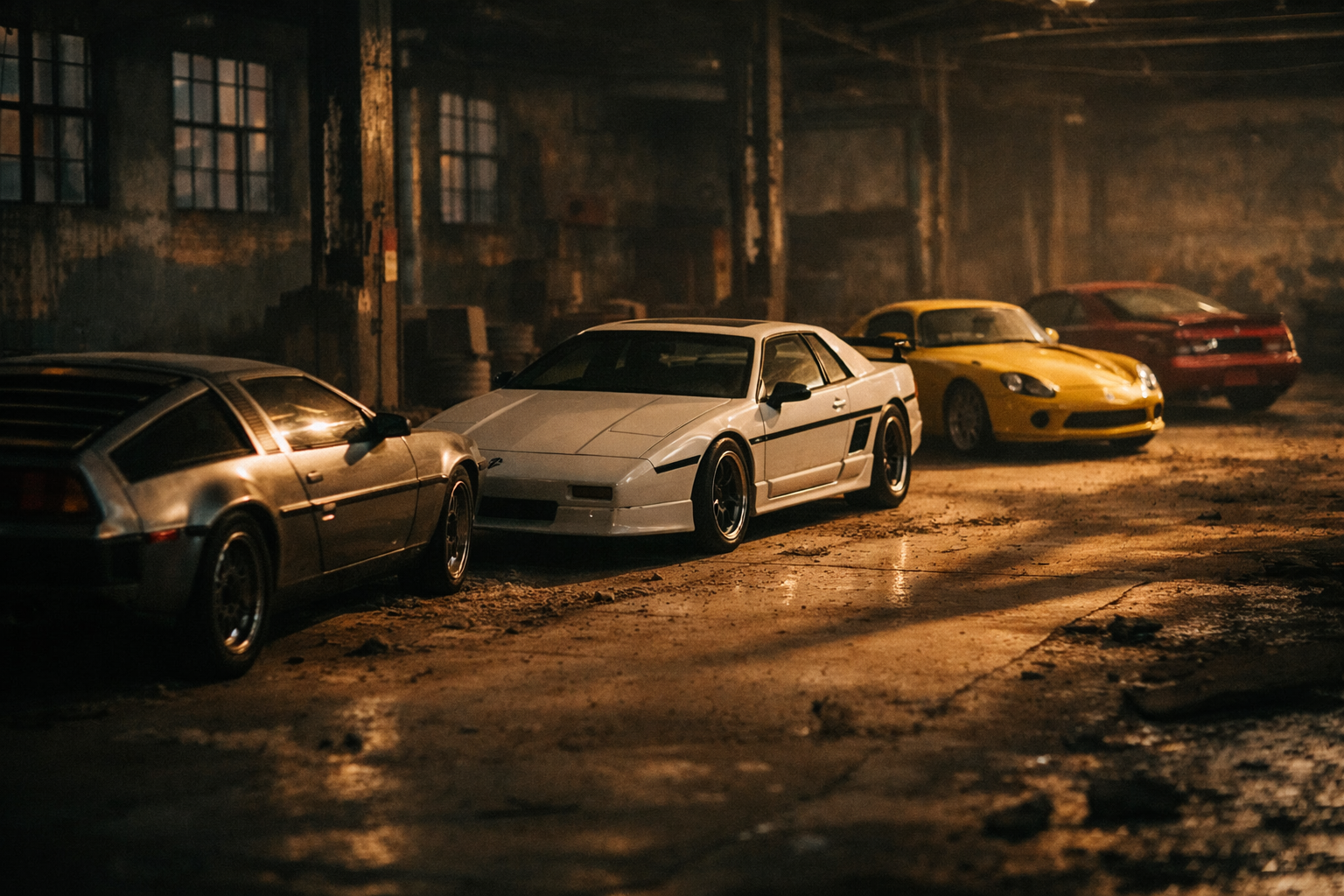
In the automotive world, performance alone doesn’t guarantee success. Some sports cars delivered impressive speed, handling, and engineering, yet failed commercially or disappeared from the market. Poor timing, high costs, weak marketing, or brand perception often held them back.
Let’s explore sports cars that had everything on paper—but still failed.
1. Toyota MR2 (Third Generation)
The third-generation Toyota MR2 was a lightweight, mid-engine sports car with excellent balance and driving dynamics. It offered pure handling fun rather than raw power.
Despite its capabilities, buyers expected more aggression and performance from the MR2 name.
Why it failed:
Underpowered image and lack of excitement compared to rivals.
2. BMW Z3 M Coupe
Nicknamed the “clown shoe,” the Z3 M Coupe had outstanding performance and one of BMW’s most powerful engines at the time. It offered sharp handling and a unique driving experience.
However, its unconventional design polarized opinions.
Why it failed:
Controversial styling limited mass appeal.
3. Honda S2000 (Late Years)
The Honda S2000 was a masterpiece—high-revving engine, perfect balance, and exceptional reliability. Enthusiasts loved it, but it struggled with mainstream buyers.
As safety and comfort demands increased, the S2000’s raw nature became a disadvantage.
Why it failed:
Market shift toward comfort and practicality.
4. Alfa Romeo 8C Competizione
The Alfa Romeo 8C was stunning to look at and powered by a beautiful engine. It offered exclusivity and emotional appeal like few others.
Unfortunately, it was priced too high for what it offered in performance.
Why it failed:
High cost and limited everyday usability.
5. Pontiac Solstice GXP
The Solstice GXP delivered strong turbocharged performance and impressive styling. It was genuinely quick and fun to drive.
However, the brand itself was struggling, and the car never reached its full potential.
Why it failed:
Brand collapse and lack of long-term support.
6. Nissan 300ZX (Z32)
The Nissan 300ZX was technologically advanced and very fast for its time. It featured modern design and excellent performance credentials.
Its complexity made maintenance expensive, discouraging buyers.
Why it failed:
High costs and over-engineering.
7. Lotus Evora (Early Models)
The Lotus Evora offered fantastic handling and a more refined experience than earlier Lotus cars. It was fast, lightweight, and beautifully balanced.
Despite this, it struggled against more luxurious competitors.
Why it failed:
Brand perception and interior quality concerns.
8. Mitsubishi 3000GT VR-4
This car was packed with advanced technology and strong performance. It offered all-wheel drive and impressive power.
However, it was heavy and expensive to maintain.
Why it failed:
Complex systems and rising ownership costs.
Why Great Sports Cars Fail
Even high-performance sports cars can fail due to:
- Poor market timing
- High pricing or ownership costs
- Weak brand trust
- Changing consumer preferences
- Design choices that divide opinions
Performance alone is just one piece of the puzzle.
Final Thoughts
These sports cars prove that great engineering doesn’t always equal commercial success. While they may have failed in the marketplace, many have gained cult status among enthusiasts who appreciate what they truly offered.
Sometimes, the best sports cars are the ones history misunderstood.