
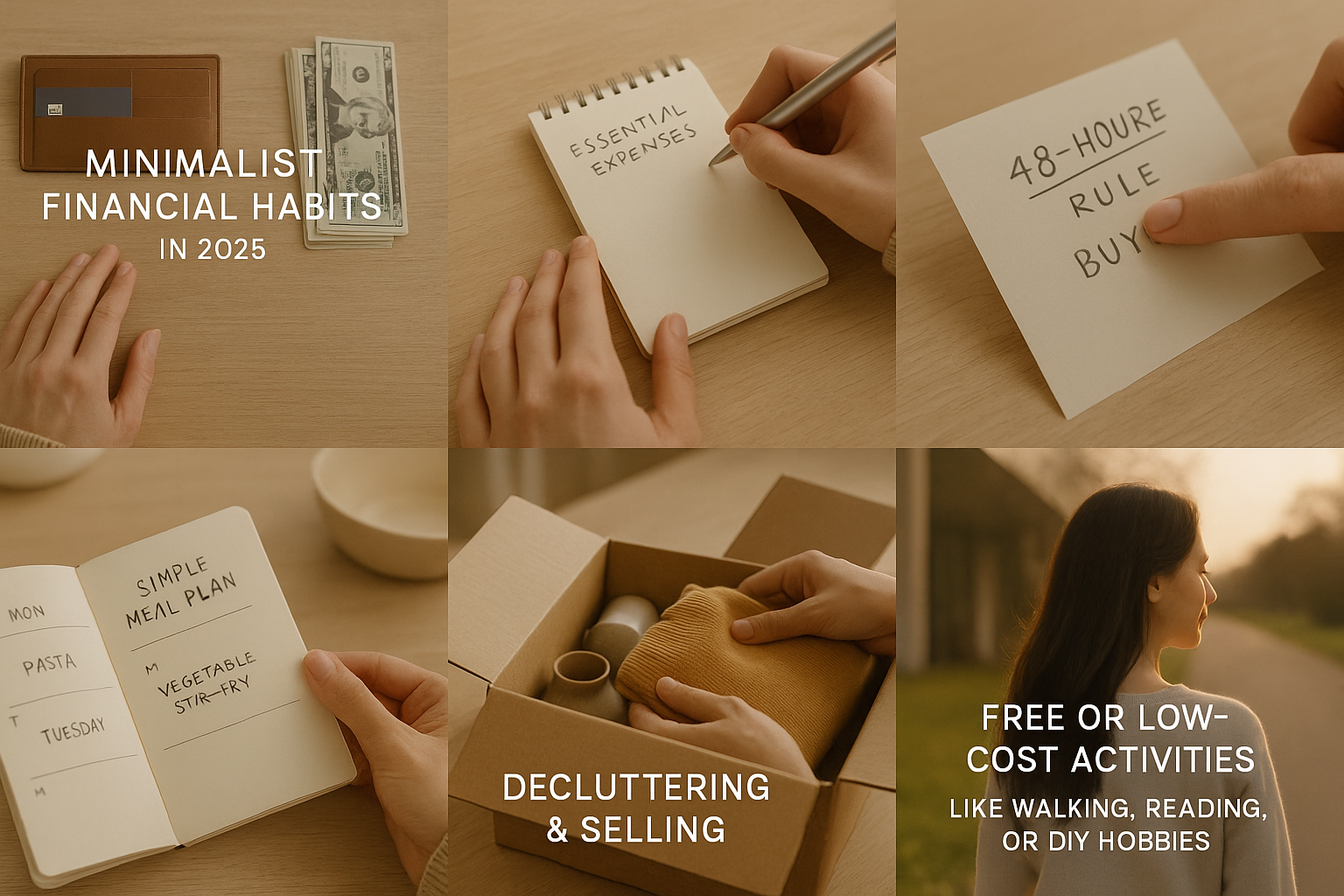
Minimalism is no longer just about owning fewer things—it’s about owning your money, your time, and your choices. In 2025, more people are shifting to a minimalist lifestyle because it reduces stress, boosts savings, and brings financial clarity. You don’t need to earn more to save more; sometimes you just need to simplify your habits. Here’s how minimalist financial habits can help you cut costs quickly and build long-term financial stability.
🧹 1. Track Only the Expenses That Matter
Instead of complicated budgeting apps and 50 expense categories, track only your top three spending zones:
- Food
- Rent/Bills
- Personal spending
Just focusing on these three areas helps you control 80% of your money flow without feeling overwhelmed.
🛒 2. Switch to the “Buy Once” Mindset
Minimalists focus on buying quality items that last longer, instead of cheap things that break often.
One high-quality purchase always saves more money than multiple cheap purchases over time.
🧾 3. Use the 48-Hour Rule for Impulse Purchases
Before buying anything you want (not need), wait 48 hours.
Most impulsive desires disappear, saving you money instantly.
This habit alone can reduce monthly spending by 30–40%.
☕ 4. Cut Down Recurring Subscriptions
Today, most people pay for:
- OTT platforms
- Apps
- Unused memberships
- Premium upgrades
Minimalists keep only 2–3 subscriptions max.
Canceling even small subscriptions adds up to surprisingly big savings.
🥗 5. Choose Simple Meal Plans
Minimalist eating is not about restrictions—it’s about routine.
Eating the same set of healthy meals reduces:
- Grocery cost
- Food waste
- Impulse takeout spending
Create a simple weekly meal plan to save both money and time.
📱 6. Unsubscribe From Promotions & Reduce Digital Noise
Marketing emails, sale alerts, and flashy ads trigger impulse shopping.
Minimalists simplify their digital life by:
- Unsubscribing from marketing emails
- Muting brand pages
- Turning off notifications
Less temptation = more savings.
💳 7. Use One Card for All Payments
Instead of multiple cards, use one debit or credit card.
You instantly get:
- Clear tracking
- Better cashback
- Zero confusion
Simplifying payments prevents overspending.
🧼 8. Declutter & Sell Unused Items
Minimalism encourages owning less—meaning you can sell the extras.
You’ll earn from:
- Clothes you don’t wear
- Gadgets you don’t use
- Decor you don’t need
You save money and make money instantly.
🚶 9. Prioritize Free or Low-Cost Activities
Entertainment doesn’t have to be expensive.
Try:
- Walking
- Reading
- Free online classes
- DIY hobbies
Minimalists focus on value, not price tags.
🧠 10. Practice “Intentional Spending”
Don’t cut everything—just choose what matters.
Minimalist financial habits focus on value, clarity, and purpose, not sacrifice.
Spend on experiences and goals, not clutter.
✅ Final Thoughts
Minimalist financial habits are not about being strict—they’re about being smart.
By simplifying your expenses, removing clutter, and making intentional buying decisions, you can save money fast while building a calmer, more focused lifestyle.
Start with one habit today, and watch how quickly your finances transform.